
Only experienced investors with a high risk appetite, a grasp of market cycles, and comfort with volatility and timing risk should invest.

In all, seven countries have expressed interest in hosting future Commonwealth Games with five of those focused on staging the centenary edition.

The government had pegged the fiscal deficit for 2020-21 at Rs 7.96 lakh crore or 3.5 per cent of the GDP in the budget presented by Finance Minister Nirmala Sitharaman in February.

Your ultimate guide to helicopter rides in India this Valentine's Day

This is the first "Green budget" of the government for effective containment of pollution in the city, the deputy chief minister said in the budget session of the assembly in the presence of Chief Minister Arvind Kejriwal.
In November, the fiscal deficit widened by Rs 2.2 trillion, the highest ever in any month this financial year.

The amount allocated for 'Tour Expenses' has been fixed at Rs 259 crore.

The Lower House of Parliament took up the Demands for Grants and Appropriation Bills after two adjournments as the ruling and Opposition MPs engaged in a matching duet over demands for an apology by Rahul Gandhi and the Adani issue.

Central ministries as a whole are expected to get an increase of only 15 per cent in gross budgetary support for 2008-09, much lower than the 62 per cent increase they had demanded.

'Increased allocations for MNREGA could have provided the much needed push to rural demand and consumption at a time when recovery continues to remain uneven.'

The Union government's fiscal deficit further widened to Rs 9.53 lakh crore, which is nearly 120 per cent of the annual budget estimate, at the end of October of the current financial year, according to official data released on Friday. The deficit widened mainly on account of poor revenue realisation. The lockdown imposed to curb spreading of coronavirus infections had significantly impacted business activities and in turn contributed to sluggish revenue realisation.
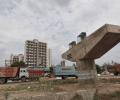
These could include strengthening the public-private partnership (PPP) dispute resolution mechanism, uniform PPP institutional framework, easier terms for infrastructure companies accessing bond markets, and tax sops, Business Standard has learnt. Investment in infrastructure projects with high multiplier effect has been the Centre's main plank to revive the economy, create employment and boost consumption.
During the pre-budget consultation with Union finance minister, some states made a case for fiscal expansion by boosting consumption to tide over the sluggishness in the economy.

The Union Budget 2025-26 on Saturday allocated Rs 2,33,210.68 crore to the Ministry of Home Affairs with the majority of the fund -- Rs 1,60,391.06 crore -- being given to central police forces like Central Reserve Police Force (CRPF), Border Security Force (BSF) and Central Industrial Security Force (CISF) which are responsible for internal security, border guarding and security of vital installations.

Kerala on Monday became the first state to adopt a water budget in a bid to come up with a solution to water scarcity in certain regions there. The first phase of the project would cover 94 gram panchayats and 15 block panchayats. The Public Water Budget was released by Chief Minister Pinarayi Vijayan on Monday, along with the launch of the third phase of the Ini Njan Ozhukatte (Let me flow now) project, for the rehabilitation of irrigation networks in the Western Ghats.

Real estate developers are hoping that the slew of tax concessions announced in Union Budget 2025, set to take effect this financial year, will spur demand for affordable and mid-segment housing, even as the broader housing market shows signs of fatigue.

Sitharaman does away with loans from National Small Savings Fund to Food Corporation of India.

Defence stocks have been on a tear, with the Nifty India Defence index hitting all-time highs. Over the past week, the index jumped around 7 per cent, far outpacing the flat performance of the Nifty 50. Over the past month, its 12 per cent gain has trebled the benchmark's return.
The government, it would seem, is reserving its firepower to spend on big-ticket items that will be announced in the Budget, reports Subhomoy Bhattacharjee.

Parrikar, who is suffering from pancreatic ailment, presented a revenue surplus state budget sitting on his chair in the state assembly, with a tube inserted through his nose.

The Union government is projected to share about 32 per cent of central taxes with states during the financial year 2024-25 against the 15th Finance Commission's recommendation of 41 per cent. The Revised Estimates (RE) for FY24, too, show a similar share of states in the central taxes at 32 per cent. In absolute terms, however, there has been an increase in the amount devolved to states compared to the Budget Estimates (BE) for FY24 at Rs 11 trillion.

After the government sought Parliament's nod for a second batch of supplementary demand for grants that will cause a hit of Rs 2.99 trillion to the exchequer, doubts suddenly arose about the government's ability to meet the Budget projections of reining in its fiscal deficit at 6.8 per cent of gross domestic product (GDP), or Rs 15.06 trillion, for the current financial year. Till now, many were of the opinion that the government would succeed in checking the deficit at a much lower figure than what was given in the Budget Estimates (BE). The government had sought Parliament's approval to spend Rs 3.74 trillion extra, but Rs 74,517.01 crore will be matched by equal savings on other heads.

The net direct tax collection so far this fiscal rose 19.41 per cent to Rs 14.70 lakh crore, reaching about 81 per cent of the full-year target, the income tax department said on Thursday. "The provisional figures of Direct Tax collections up to January 10, 2024, continue to register steady growth," the Central Board of Direct Taxes (CBDT) said in a statement. Direct Tax collection, net of refunds, stood at Rs 14.70 lakh crore which is 19.41 per cent higher than the net collection for the corresponding period of last year.
'Each state is unique, but when it comes to finance, the fundamentals cannot be different.'

The upcoming Union Budget to be presented on February 1 is likely to assume a nominal gross domestic product (GDP) growth between 10 and 10.5 per cent for FY26, a Business Standard poll of 10 economists showed. The first advance estimates released by the National Statistics Office (NSO) had estimated a nominal GDP growth of 9.7 per cent for FY25. Nominal GDP, calculated at current market prices, factors in the effect of inflation. It is used as the base to calculate crucial macroeconomic indicators, such as fiscal deficit, revenue deficit, and debt-to-GDP ratio.

Finance Minister Nirmala Sitharaman has brought down the budgetary allocation for the fertiliser subsidy for FY21 to Rs 71,309 crore, from the RE of Rs 79,998 crore for FY20, while increasing food subsidy to FCI through "ways and means advance" to Rs 50,000 crore for FY21, from Rs 36,000 crore in RE for FY20, and under the National Food Security Act (NFSA) to Rs 77,982 crore, from Rs 75,000 crore.

7 key areas that the Budget must address to re-energise the infrastructure sector, suggests Vinayak Chatterjee.
When Nirmala Sitharaman announced her new privatisation policy, there were serious doubts if the move had the BJP's full political backing. All those doubts were dispelled when her initiatives were endorsed by Modi in Parliament, observes A K Bhattacharya.

Finance Minister Nirmala Sitharaman is scheduled to address the post-budget meeting of the RBI's central board on Monday and highlight key points of the Union Budget 2022-23, including the fiscal consolidation roadmap and high capex plan. It has been a custom that the finance minister addresses the RBI board, consisting of RBI Governor and existing four deputy governors, after the Budget. The meeting has been scheduled for February 14 where she would be addressing the board members and talk about announcements made in the Budget to perk up growth hit by three waves of COVID-19, sources said.

'Spend, but create assets, spend but make sure that people benefit from it.' 'This has been a beautiful guiding principle. And I think as a finance minister I owe so much to the prime minister for keeping this path clear before us.'

The ruling Bharatiya Janata Party in poll-bound Karnataka on Friday sought to woo farmers, women and younger generation with a slew of welfare measures in its last budget in the current term, also earmarking Rs 1000 crore towards development and renovation of various temples and maths in the state.

However, finding the funds to fulfill them will be a herculean task.

Sanam Teri Kasam got the biggest collections ever for a re-release.

The forthcoming Budget, the last full one before the 2019 Lok Sabha elections, is expected to contain a number of sops and feel-good announcements, especially regarding social sector schemes.

The finance ministry has finalised the framework to issue sovereign green bonds in line with global standards, according to sources. The government intends to mobilise Rs 16,000 crore from the issuance of green bonds during the second half of the current financial year. It is a part of the borrowing programme for the second half of this fiscal. The framework is ready and it would be approved soon, the sources said.
Finance Minister Nirmala Sitharaman on Monday said the government has come out with open and transparent Budget and has not made any attempt to hide anything under the carpet.
'We now look at divestment as an opportunity for maximising the value of public assets, not necessarily as a short-term resource-raising measure.'

Gross GST collections rose by 9.1 per cent to about Rs 1.84 lakh crore in February, boosted by domestic consumption and indicating potential economic revival. As per the official data released on Saturday, on a gross basis, mop up from Central GST stood at Rs 35,204 crore, State GST at Rs 43,704 crore, Integrated GST at Rs 90,870 crore and compensation cess of Rs 13,868 crore.
Annual plan of 65 ministries and depts hiked 27%.

Finance Minister Nirmala Sitharaman on Wednesday allocated nearly Rs 12,544 crore to the department of space as India plans a human spaceflight -- Gaganyaan -- next year and sets out to explore the moon and neighbouring planets.
